
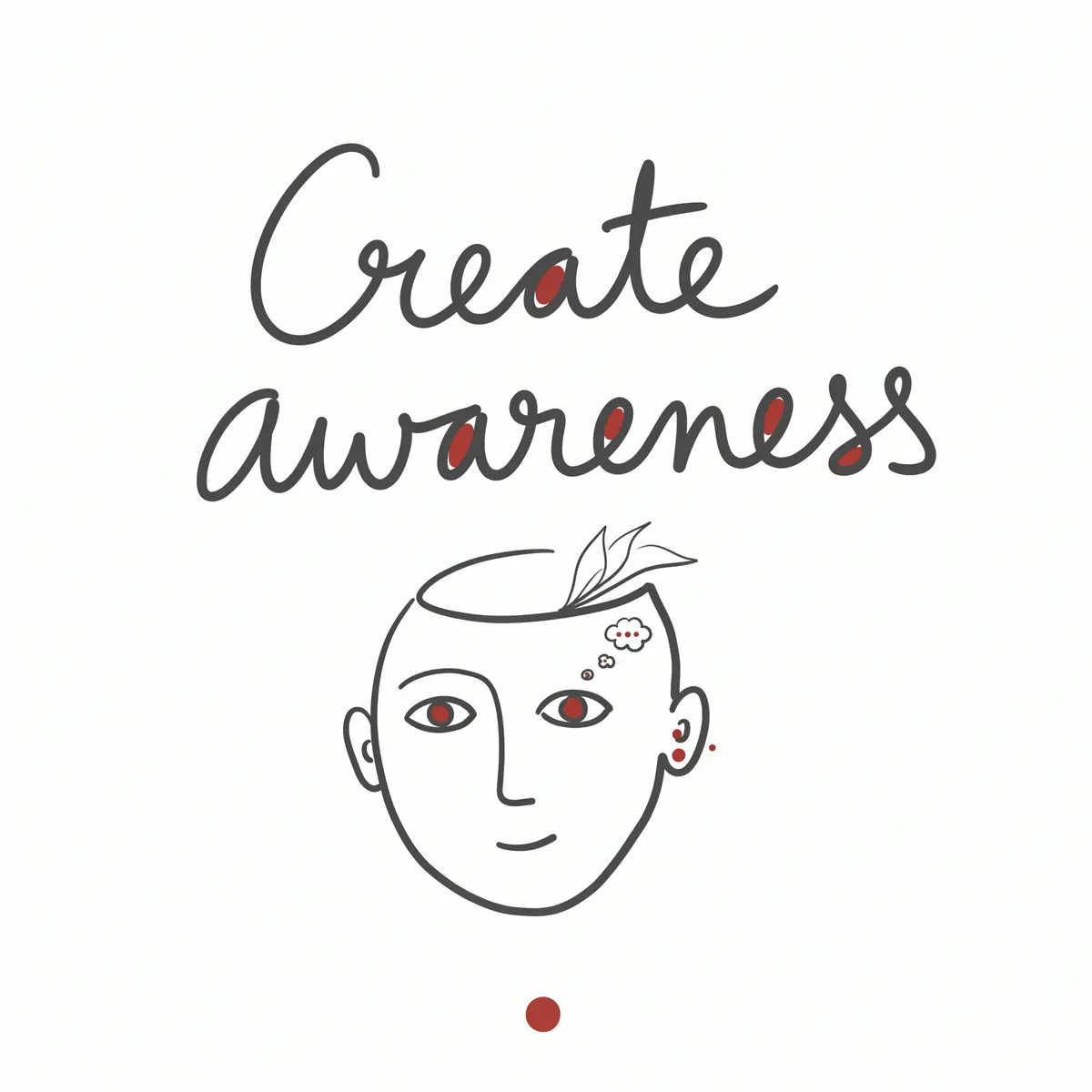
Create awareness
The first step is to be aware of your Self.
Just Breath.
Focus on your heart
While breathing in
visualize the air coming from your nostrils into you heart
and say:
I am breathing in.
When breathing out
visualize the air coming from your heart into your nostrils
and say:
I am breathing out.
Just regular breath or deep breath.
Find your own peaceful pace.
The second step is the focus of the mind.
On the breathing
On the rhythm
A simple formulation of awareness
I am breathing in
I am breathing out
Focus on your breath
Focus on your heart
Focus on your mind
©️ Mlaure
Understand Self-Awareness
Self-awareness is the ability to recognize and understand one’s own thoughts, emotions, and behaviors. It serves as a cornerstone for personal growth and overall well-being, enabling individuals to identify their strengths and weaknesses, which can significantly impact decision-making and interpersonal relationships. When a person develops a high degree of self-awareness, they become more adept at navigating their emotional landscape, allowing them to respond to situations with greater clarity and purpose.
Being self-aware not only helps in making informed choices but also enhances one’s capacity for empathy. Understanding how one’s actions and words affect others fosters better relationships, both personally and professionally. A self-aware individual tends to engage in critical reflection, evaluating their motives and responses, which can lead to healthier interactions and reduced conflict. This reflective practice is a key element of emotional intelligence, a vital skill for thriving in various aspects of life.
To cultivate self-awareness, individuals can employ various techniques. Mindfulness practices, such as meditation and focused breathing exercises, are effective in promoting a deeper understanding of one’s thoughts and emotions. These practices encourage individuals to observe their internal dialogues without judgment, creating a safe space for exploration and insight. Additionally, reflective exercises like journaling can provide a tangible means to track emotional patterns and thought processes over time, facilitating self-discovery.
Engaging with feedback from others can also enhance self-awareness. By seeking constructive criticism from trusted peers or mentors, individuals can gain new perspectives on their behaviors and attitudes, leading to a more rounded sense of self. Overall, enhancing self-awareness is a transformative journey that not only elevates personal growth but also cultivates more meaningful connections with those around us.


The Power of Breath in Mindfulness
Breathing is a fundamental and often overlooked aspect of mindfulness practice, serving as a bridge between the mind and body. The act of conscious breathing allows individuals to cultivate awareness and presence, helping to anchor their attention in the present moment. This intentional focus on breath has profound implications for mental clarity and emotional regulation.
Breath acts as a natural stress-reliever. When we experience stress, our breathing often becomes shallow and rapid, which can escalate feelings of anxiety. By deliberately slowing and deepening our breath, we activate the parasympathetic nervous system, promoting relaxation and reducing stress. Techniques such as diaphragmatic breathing, box breathing, and 4-7-8 breathing can be particularly effective in calming the mind and restoring a sense of equilibrium.
The practice of mindfulness breathing encourages awareness of each inhalation and exhalation, fostering a deeper connection to one’s emotions and thoughts. This heightened awareness aids in recognizing negative patterns and emotional triggers, allowing for greater self-regulation. For example, taking a moment to focus on the breath during moments of frustration or unease can provide the necessary pause to respond thoughtfully rather than react impulsively.
Additionally, the use of breath control techniques can enhance concentration levels. When individuals concentrate on their breathing, they can filter out distractions, making it easier to focus on tasks at hand. This improved focus can translate into more efficient problem-solving and creativity, demonstrating that the role of breath extends beyond mere relaxation to significantly impacting cognitive functions.
Incorporating conscious breathing into daily routines not only enhances mindfulness but also nurtures emotional balance. By embracing this simple yet powerful practice, individuals can foster resilience and cultivate a more centered and fulfilling life.


Fostering Focus and Attention
In an era characterized by constant distractions, the ability to focus and maintain attention has become increasingly pivotal. Focus is not merely a skill; it is a crucial component that influences both our heart and mind. Recognizing this interconnectedness can pave the way for enhanced concentration. This understanding lays the foundation for practical strategies aimed at improving one’s ability to concentrate amidst the noise of daily life.
One effective method for fostering focus is setting clear intentions. By establishing specific goals or tasks, individuals create a roadmap for their attention, directing their mental resources toward what truly matters. Intention setting serves as a motivational tool, igniting a purposeful mindset that can shield against distractions. Such a proactive approach ensures that individuals can maintain a strong focus on their objectives, thereby enhancing productivity.
In addition to intention setting, minimizing external distractions plays a critical role in cultivating a focused mindset. This can be achieved by creating an environment conducive to concentration. Techniques such as decluttering workspaces, silencing notifications on electronic devices, and allocating dedicated time blocks for focused tasks can significantly bolster one’s ability to concentrate. These strategies not only mitigate interruptions but also foster a greater connection between the heart and mind, allowing inner peace and clarity to enhance focus.
Another beneficial approach involves mindfulness exercises that train the mind to return to the present moment. Practices such as deep breathing and meditation encourage individuals to steer their thoughts back to the task at hand whenever distractions arise. By regularly engaging in these techniques, one can develop a heightened awareness of when their attention wanes and take conscious steps to recenter themselves.
In conclusion, fostering focus and attention is an essential endeavor that requires intention, environmental adjustments, and mindfulness practices. By integrating these principles into daily routines, individuals can enhance their concentration and unlock the profound potential of a focused mind, ultimately leading to improved overall well-being.



Integrating Heart and Mind for Holistic Awareness
To cultivate a deeper awareness, integrating emotional intelligence—often represented by the heart—with cognitive processes rooted in the mind is essential. Emotional intelligence encompasses the ability to recognize, understand, and manage our own emotions, as well as the emotions of others. Such integration enables individuals to strike a balance between emotional responses and rational thought, which is particularly valuable in high-stress situations. When feelings are harmonized with thoughts, decision-making can become more clear and effective.
Understanding the interplay between emotions and thoughts allows individuals to respond to challenges with both compassion and clarity. For example, in a conflict situation, a person who has developed this integration can feel empathy for the opposing viewpoint while still articulating their own thoughts sensibly. This balance provides a foundation for engaging in more productive discussions and problem-solving, enhancing interpersonal relationships.
Moreover, cultivating qualities such as compassion, empathy, and self-compassion plays a pivotal role in this integration process. Compassion not only fosters a sense of connection to others but also encourages a supportive internal dialogue. Empathy allows one to see the world through another’s perspective, which enriches relationships and nurtures a sense of community. Self-compassion, on the other hand, encourages individuals to treat themselves kindly during difficult times. When one integrates these emotional capacities with rational thought processes, the outcome is a more harmonious existence.
Practicing mindfulness techniques, such as meditation, can serve as a bridge between heart and mind. By quieting the mental chatter, individuals can tune into their emotions and thoughts, creating space for reflection and understanding. Over time, this nurturing of emotional and cognitive integration produces a balanced approach to life’s complexities, ultimately fostering a more mindful and aware existence.



Mlaure’s images, poetry, songs, videos and digital pictures are for personal use and as wallpaper only! Not for commercial use or for distribution in any graphic collection, or in any other manner.

