The Fish Who Remembered Salt
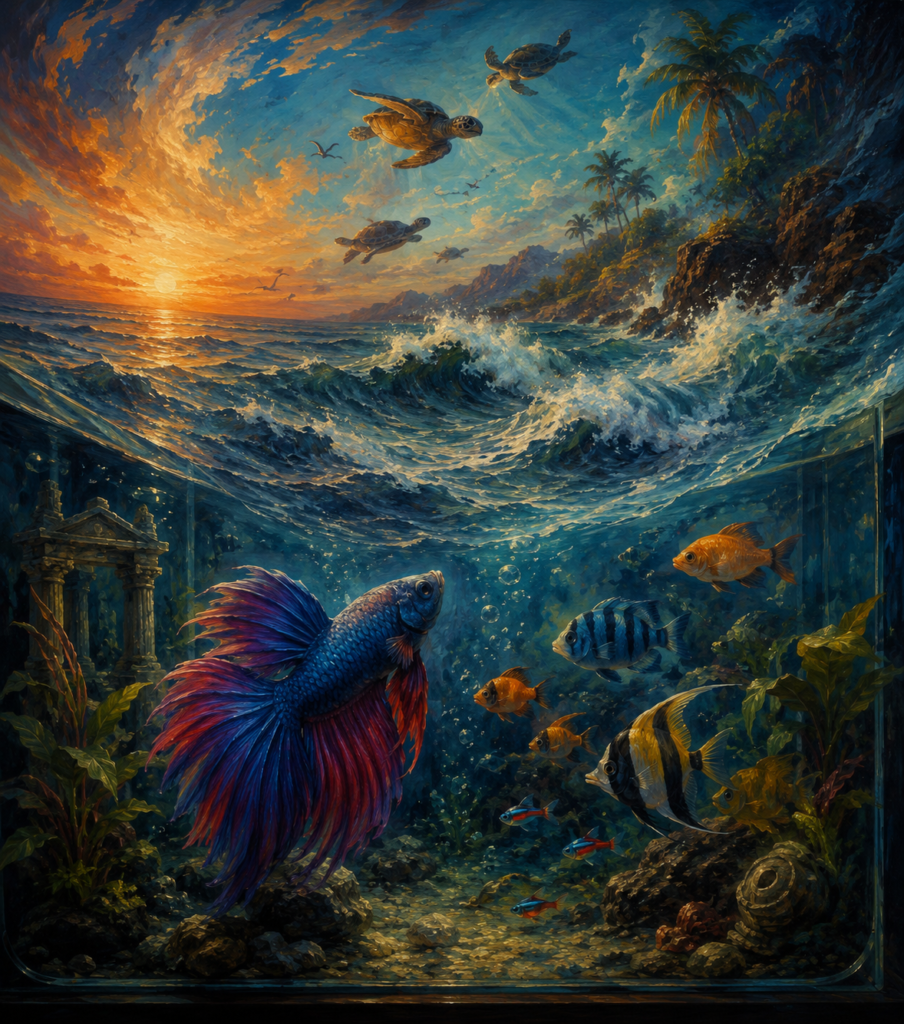
A poem about a Fish Who Remembered Salt
He came in a bag of silver light,
Through doors that sighed and closed too tight,
Into a kingdom made of glass
Where painted castles watched days pass.
The water hummed with filtered rain,
A tidy, bright, mechanical plain;
The others darted, fat and free,
And called this little world “the sea.”
They praised the pebbles, blue and clean,
The plastic weeds forever green;
They laughed at him when, still and slow,
He spoke of tides they’d never know.
He told of currents wild and deep,
Of waves too large for reefs to keep,
Of moonlit water, dark and wide,
And storms that breathed like living tide.
“The ocean?” said a yellow fish.
“A strange and unnecessary wish.
Why dream beyond the warming light?
This tank provides us all delight.”
Another flicked a scarlet fin:
“There is no world we are not in.
The glass, perhaps, is simply sky;
Beyond it nothing swims… or lies.”
So day by day he circled near
The wall that shimmered cold and clear,
And watched beyond the room’s dim glow
A distant blue he could not know.
At night, while all the tank lay still,
He dreamed against his quiet will:
Not of treasure, weeds, or stone…
But endless water, and being unknown.
And in his sleep his small heart heard
A lost and ancient ocean-word,
Calling softly through the deep
To one lone fish who could not sleep.
Note
There is something quietly human in that dreaming fish …
the ache for a world remembered by instinct,
even when surrounded by voices that call the glass enough.
“Somewhere, something incredible is waiting to be known.”
— Carl Sagan
May the little ocean-dreamer keep swimming toward impossible horizons.
Introduction to Tropical Fish
Tropical fish are a diverse group of fish species that thrive in warm waters, typically found in regions near the equator. Characteristically, these fish are known for their vivid colors, intricate patterns, and varied shapes that enhance their appeal to aquarium enthusiasts and marine biologists alike. Their natural habitats mainly include coral reefs, rivers, and lakes, where the warm, shallow waters provide optimal conditions for their growth and reproduction.
One of the key aspects that make tropical fish fascinating is their incredible diversity. Tropical waters host thousands of fish species, each adapted to their specific environment. Popular species among aquarists include the vibrant Neon Tetra, with its striking blue and red stripes, and the peaceful Betta fish, known for its flowing fins and aggressive behavior during breeding season. Other noteworthy species include Angelfish, Guppies, and Clownfish, each showcasing unique traits and care requirements that cater to various levels of aquarium hobbyists.
The behaviors exhibited by tropical fish further contribute to their allure. Some species, like the Watchman Goby, engage in symbiotic relationships with shrimp, while others display fascinating courtship rituals. These behaviors not only captivate observers but also emphasize the ecological interactions present within their native ecosystems. Understanding the unique qualities of tropical fish allows aquarists to create optimal environments that reflect their natural habitats, providing enrichment and promoting the well-being of these beautiful creatures.
In conclusion, tropical fish are more than just colorful pets; they represent a complex and vibrant world that offers endless possibilities for exploration. Their diverse species, stunning visual appeal, and intriguing behaviors play a significant role in both ecosystems and the aquarium hobby, making them a cherished element of aquatic life.


The Role of Aquariums in Tropical Fish Care
Aquariums serve a crucial function in the care and management of tropical fish by creating an environment that closely mimics their natural habitats. These controlled ecosystems allow for the replication of the specific conditions necessary for the survival and well-being of various tropical fish species. By using suitable aquarium setups, fishkeepers can foster a thriving aquatic environment.
First and foremost, the proper aquarium setup is essential. This includes selecting an appropriately sized tank, which varies according to the species of tropical fish being kept. Different fish exhibit distinct space requirements, and overcrowding can lead to stress and aggressive behavior. Additionally, the incorporation of aquascaping elements such as plants, rocks, and substrates helps replicate the natural surroundings that tropical fish are accustomed to, providing them with shelter and stimulation.
Maintaining water quality is another pivotal aspect of tropical fish care in an aquarium. Regular testing for parameters such as pH, ammonia, nitrite, and nitrate levels ensures a safe environment. A well-functioning filtration system is critical, as it helps maintain optimal water conditions through mechanical, biological, and chemical filtration. Fishkeepers should also perform routine water changes to keep the water clean and reduce the buildup of harmful substances.
Furthermore, the selection of compatible tank mates cannot be overlooked. Tropical fish often thrive in community settings, so understanding the behavior and territoriality of different species is important. Mixing incompatible species can lead to unnecessary stress or even aggression. By carefully choosing tank mates, aquarists can create a harmonious environment that fosters healthy interactions.
In conclusion, aquariums play a vital role in the care of tropical fish. By maintaining a suitable setup, ensuring high water quality, and selecting appropriate tank mates, fishkeepers can create a thriving ecosystem. These practices contribute significantly to the overall health and longevity of tropical fish in their controlled environments.


The Ocean as the Natural Habitat of Tropical Fish
Tropical fish are predominantly found in the warm, shallow waters of the oceans, particularly in regions around the equator. The most significant and renowned of these habitats are coral reefs, which are teeming with a diverse array of marine life. Coral reefs not only provide shelter and breeding grounds for tropical fish but also offer a wealth of food sources, making them essential for the survival of these species. The intricate structures of coral reefs create numerous niches where various fish can thrive, each adapted to specific environmental conditions.
Marine ecosystems are crucial in supporting the biodiversity that tropical fish represent. The health of these ecosystems is directly correlated with the overall abundance and variety of tropical fish populations. However, these vital habitats face significant threats from human activities such as pollution, climate change, and overfishing. Chemicals and waste entering the oceans can degrade water quality and harm marine life, while rising sea temperatures and acidification compromise coral structures, leading to bleaching events that are devastating to reef ecosystems.
Overfishing poses another critical challenge, as it disrupts local fish populations and alters the delicate balance of these ecosystems. The removal of key species can cascade through the food web, affecting not only tropical fish but also the myriad of organisms that rely on the same environment. It is essential to recognize the interplay between ocean health, the biodiversity of tropical fish, and sustainable aquarium practices. Only through better understanding and preserving these ecosystems can we assure the longevity of tropical fish populations both in the wild and in captivity.

Conservation and Ethical Considerations in Keeping Tropical Fish
As the popularity of keeping tropical fish in home aquariums continues to rise, it is imperative to consider the ethical implications associated with this hobby. One of the key concerns is the sourcing of these fish. Wild populations often face significant pressures from the aquarium trade, leading to habitat depletion and declines in biodiversity. Responsible sourcing is essential to ensure that fish are not overexploited, which can disrupt local ecosystems and endanger vulnerable species.
Wild-caught fish can contribute to diminishing populations, and some species may not survive the transition to captivity. Therefore, it is advised that hobbyists seek out sustainably sourced fish from accredited suppliers. Breeding fish in captivity is generally preferable as it alleviates the pressure on wild populations and supports conservation efforts. This practice not only ensures that the fish are healthy and adapted to life in an aquarium, but it also reduces the environmental impact associated with capturing fish from their natural habitats.
Furthermore, aquarists play a crucial role in promoting sustainable practices within the aquarium trade. Educating fellow hobbyists about ethical considerations can foster a culture of responsibility surrounding the care and sourcing of tropical fish. Simple measures, such as supporting vendors who follow sustainable practices and advocating for the protection of fish habitats, can significantly contribute to conservation efforts.
It is vital for aquarium enthusiasts to consider the long-term implications of their choices and to actively participate in initiatives that focus on preserving aquatic ecosystems. Engagement in local conservation projects and awareness campaigns can also enhance the overall well-being of tropical fish populations worldwide. By acting responsibly, hobbyists can enjoy their passion for aquatic life while ensuring the sustainability of the ecosystems from which these vibrant species originate.
Poem on demand GPT
A poetic guide and creator, adept in finding and explaining poems across cultures.