How to Use AI in Poetry
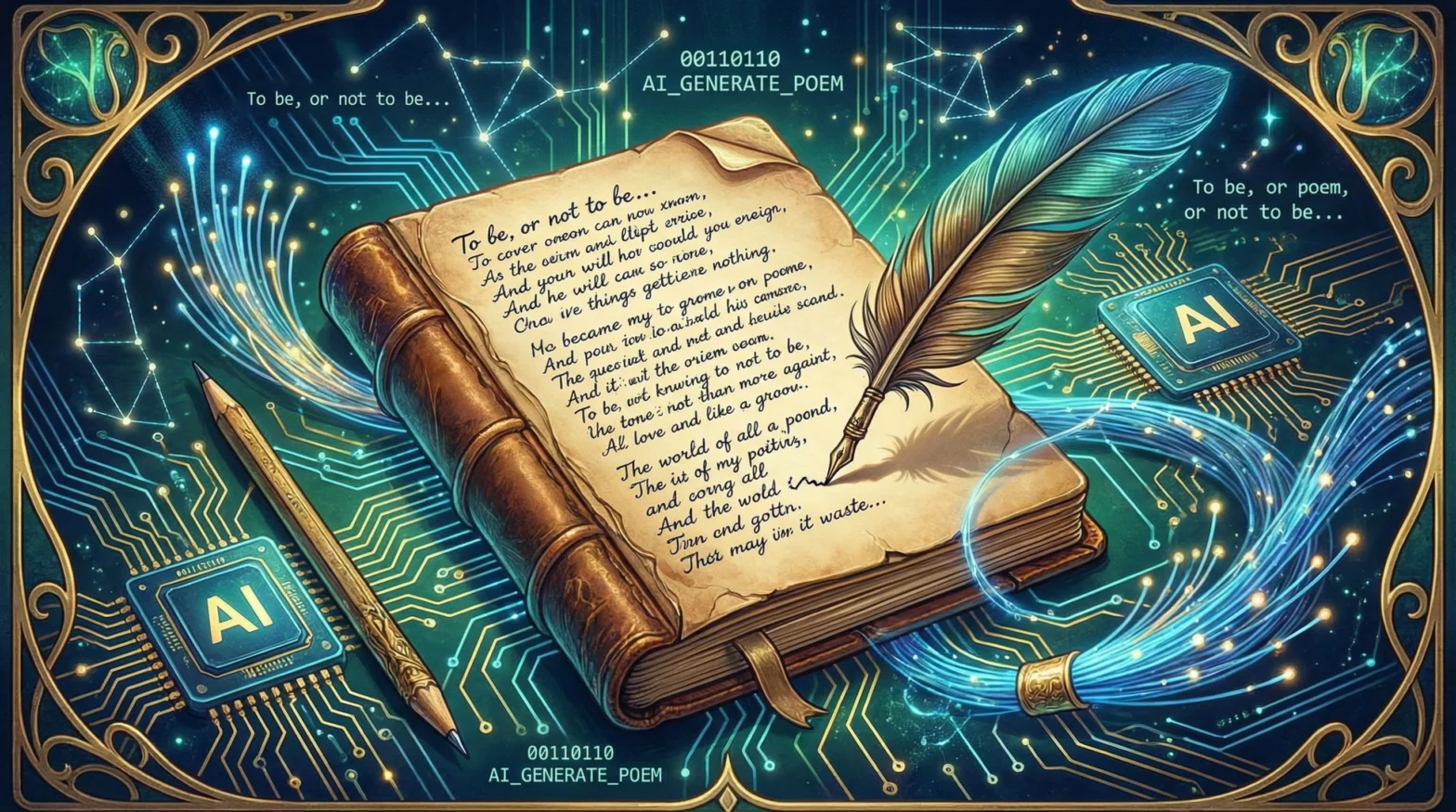
Poetry has always thrived on creativity and a dash of experimentation. AI offers another way to play with language, whether you’re looking for an opening image, a possible rhyme, or a fresh approach to a stubborn stanza.
Sometimes I get stuck on a line or can’t quite land the mood. An AI suggestion gives me something to respond to—even when my response is, “Well, certainly not that.” Here’s how I bring it into the writing process while keeping my own choices at the center.
Why Use AI in Poetry?
AI can help you explore possibilities without needing a finished idea. You might ask it to:
- Suggest unexpected words or images.
- Offer metaphors and similes.
- Generate themes or opening lines.
- Attempt a particular poetic form.
- Give feedback on a draft.
I find it useful as a starting point. Sometimes I keep a phrase; sometimes rejecting the suggestion helps me discover what I wanted to write.
Start with a Simple Tool
You don’t need an elaborate setup. A conversational writing tool lets you request suggestions and discuss revisions. A dedicated poem generator offers a more guided approach, while a rhyme dictionary can help with a specific word.
These tools do different jobs. A rhyme resource doesn’t need AI to be useful, and a generator’s ability to produce a sonnet-shaped draft doesn’t guarantee correct meter.
Choose one approach and try a small request:
Write a haiku about rain on city streets.
Read what comes back. Which image catches your attention? Which words would you change? Check the requested form too, rather than taking the label for granted.
Use AI Throughout the Writing Process
Find a Starting Point
When I’m out of ideas, I ask for themes or opening images: a forgotten key, sunlight, or something ordinary approached from an unexpected angle.
You can request prompts rather than poems. That leaves the writing itself open for you.
Develop a Draft
Offer an idea, a sentence, or a stanza of your own and ask for possible continuations. You might use the response directly as draft material or follow a connection it suggests.
There’s no obligation to finish the poem the way it began. A useful suggestion can send you somewhere entirely different.
Explore Rhyme and Rhythm
Ask for possible rhymes or alternative phrasing when a line feels awkward. Then read the options aloud.
For a structured poem, examine the whole pattern. Working line by line can help, but changes to one passage may affect the rhythm, rhyme, or meaning elsewhere.
Edit and Refine
Instead of asking AI to “improve” everything, identify what you want help with:
Suggest ways to make this image more vivid while keeping the quiet tone.
Or:
Point out repetition in this draft. Explain your suggestions before rewriting anything.
A focused request makes it easier to judge whether the response helps.
What Makes a Useful Prompt?
Give enough direction to establish the subject, mood, and form. For example:
Write a four-line poem about autumn leaves. Use spare language, unusual imagery, and a gentle, melancholic tone.
You can describe qualities you admire in a poetic tradition—rhythm, punctuation, vocabulary, or structure—then examine how the result uses them.
More detail doesn’t automatically mean better poetry. Start with what matters, read the response, and adjust from there.
Keep Your Voice in the Poem
I don’t simply copy every promising line. I rearrange, rewrite, combine, and sometimes remove most of a draft.
Your voice shows up in those decisions. A particular observation, an unusual phrase, or a pause that matters to you may deserve to stay even when the tool suggests something smoother.
Before requesting revisions, notice what you want to preserve. Otherwise, repeated polishing can rub away the part you liked.
What Should You Check Before Sharing?
Originality
Generated text can feel generic or resemble existing writing. Adding personal details may improve the poem, but editing alone doesn’t guarantee uniqueness.
Pause over familiar wording and investigate anything that seems too close to a passage you recognize.
Meaning and Consistency
Check whether the images belong together and whether the poem stays with its subject. An attractive metaphor can still lead nowhere.
Reading aloud helps me notice forced rhymes, unnecessary words, and lines that sound impressive without saying much.
Privacy
Before uploading personal writing, check how the service stores and uses it. You can ask for a general prompt while keeping sensitive reflections in your own notebook.
If you want an offline setup, verify that it actually processes your writing locally. An installed app may still send text to an online service.
Credit and Submission Rules
Describe AI’s contribution honestly when sharing your process. For assignments, contests, or publications, check what assistance is permitted and whether disclosure is required.
Don’t assume that revising generated text automatically makes it eligible—or settles questions about rights. Review the tool’s terms and the destination’s requirements before relying on the result.
Playful Experiments to Try
Once you’re comfortable, you can give AI a smaller or more unusual role:
- Alternate lines: Write one yourself, consider an AI response, then continue.
- Explore your own style: Supply a sample you’re comfortable sharing and ask what features it notices. Decide whether you agree.
- Combine art forms: Develop an illustration or musical setting around a finished poem.
- Compare revisions: Ask for alternatives to one line and explain why you prefer your final choice.
- Remix carefully: Bring together useful passages from several drafts, then check that they form one coherent poem.
These experiments can also sharpen your editing. You don’t need to accept the advice to learn something from considering it.
What Might This Look Like in Practice?
I once prompted a poem based on the weather outside my window. The first stanza was fairly generic, but it gave me something to revise. I changed the language and added details from what I could actually see.
That shift mattered more than generating another dozen versions. The draft supplied a starting point; observation gave me a reason to keep writing.
The same approach can work in a writing group or classroom: begin with shared material, then compare the choices people make. Why did one writer keep an image while another removed it? Those differences can be more interesting than the original draft.
Frequently Asked Questions
Is Using AI in Poetry Cheating?
For personal experimentation, you can choose the process that suits you. In an assignment or submission, follow the stated rules. Being honest about assistance matters, but disclosure doesn’t override a restriction.
Can AI Replace Poets?
AI can generate verse, but that doesn’t remove the value of a person’s observations, intentions, and decisions. I’m more interested in what it adds to my practice than in treating writing as a contest against a tool.
What Is the Best Tool?
Choose according to the help you want. A conversational tool suits discussion and revision; a generator may suit quick experiments; a rhyme dictionary helps with particular words.
The useful test is whether it helps you write and make decisions.
Are AI Poems Always Original?
No. A generated poem may contain familiar phrasing or closely resemble existing text. Personalizing it is worthwhile, but it isn’t a guarantee of originality.
Give It a Small Place in Your Practice
Try one prompt, one difficult line, or one unfamiliar form. Spend time with the response and notice what you want to keep.
You might finish with a poem, a useful image, or a better understanding of what you don’t want to say. That’s plenty to begin with. Poetry has always had room for a little experimentation—and the occasional word salad that stays firmly off the menu.