
The Bench Was Missing
The Bench Was Missing. A story for baby boomers.
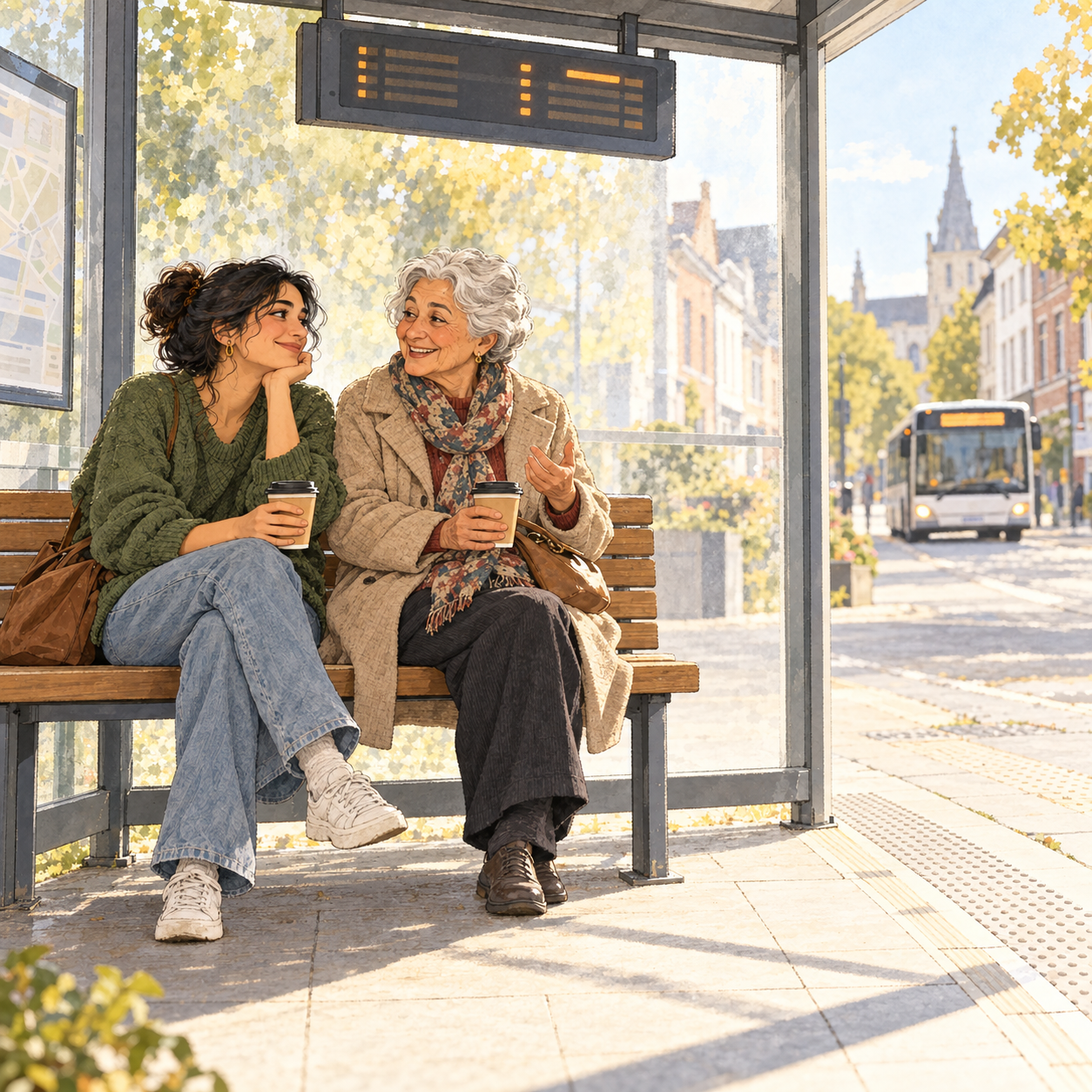
The new bus stop had a roof, an electronic screen, and a QR code. It had no bench.
Rosa, seventy-eight, stood beneath the roof while the screen announced that her bus was fourteen minutes late. Her right knee already knew. The screen kept updating; the number remained fourteen.
That afternoon she wrote to the council. The online form asked her to prove she was not a robot. Rosa ticked the box and described the problem. A robot, she thought, might have noticed the missing bench before opening the stop.
Leen phoned that evening about her doctor’s appointment.
“I’ve got the letter,” Rosa said. “Will you read something else for me?”
“Of course. What is it?”
“My complaint to the council. Check the commas, please. Leave the temper.”
Leen laughed, read it, and changed one comma. The next day Rosa went back to the stop with a notebook. She spoke to a woman waiting with shopping, a young man on crutches, and a father whose child kept asking when the bus would come. The father liked the screen. So did Rosa. He would also have liked somewhere to sit.
At the council meeting, Rosa placed the notebook on the table. She had brought photographs and the names of twelve people who used the stop. A transport officer explained that the shelter had been designed to leave room for wheelchairs and prams.
“Good,” Rosa said. “Keep that room. Put a seat along the other side.”
The officer looked at the photographs. He said he would ask the designer to check the measurements. Rosa wrote down his name and the date of the next meeting.
Four weeks later, a bench appeared beneath the screen. There was space beside it for a wheelchair or a pram. Rosa took a photograph and sent it to Leen and Noor.
Noor replied first: You did it!
The designer did the measurements, Rosa wrote. I supplied the knee.
On Sunday, Noor came by with two coffees. They sat at the stop while buses arrived and left. Rosa told her that Leen had shown her a drawing from class: a jug with a handle much too small. Noor said it was getting better.
“I hope she keeps the first one,” Rosa said. “I’d like to see where she began.”
The screen announced another delay. Noor took the lid off her coffee, and they stayed where they were.
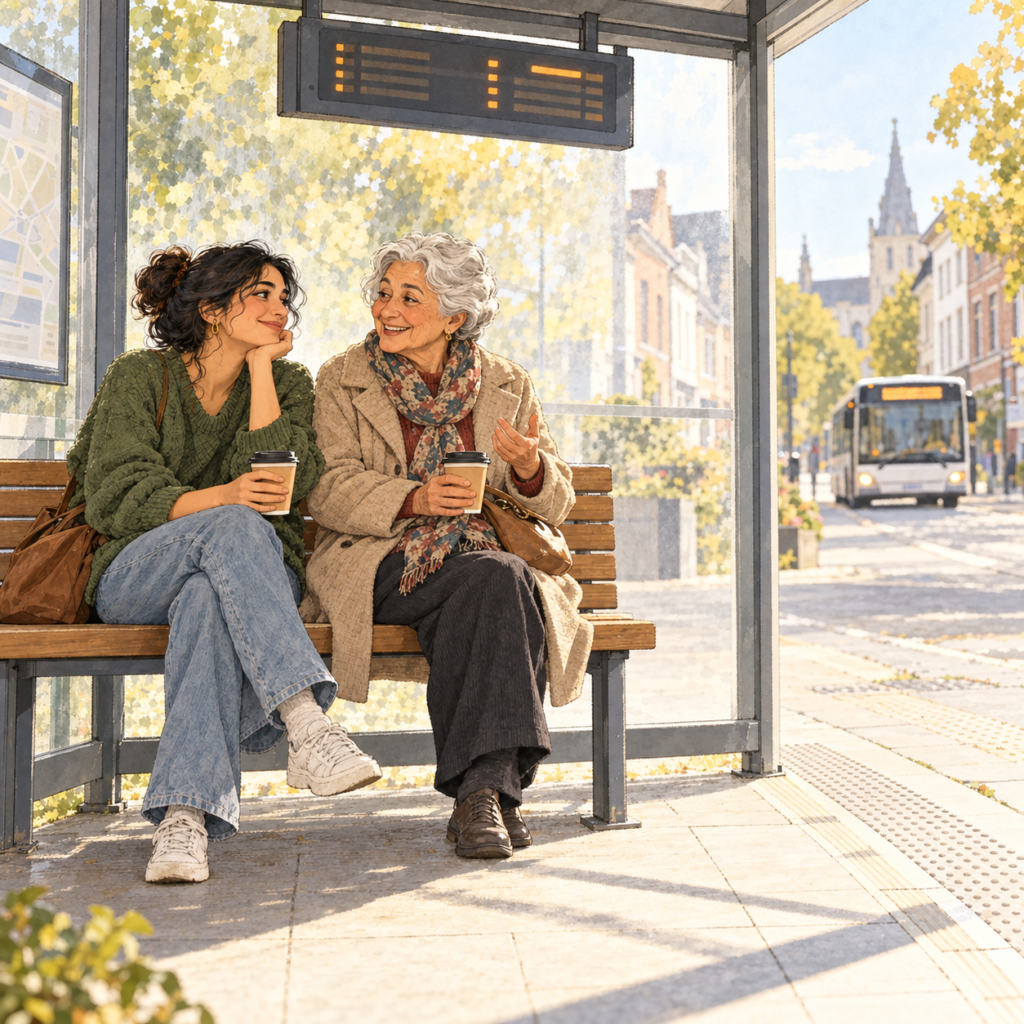
Rosa got her bench. Noor brought coffee. The bus is still late. ☕


Baby Boomers, in one table
Born roughly 1946–1964, Boomers are about 61–80 in 2026. Rosa is one of them. The label covers very different lives; wealth, health, gender, and country matter as much as birth year. www.pewresearch.org
| Lens | The Boomer version |
|---|---|
| What shaped them | Postwar rebuilding and the Cold War; social change in the 1960s; the oil crisis and economic uncertainty of the 1970s. They saw the Berlin Wall fall as adults. european-union.europa.eu |
| Worldview | “We have changed the world before. We also know change takes work.” |
| Their role now | Some work, some care for others, some volunteer, some need support themselves. Many do several of these at once. www.eurofound.europa.eu |
| Strength | Experience, persistence, and a memory of how things were built—including the parts that needed fixing. |
| Possible weakness | Experience can make a new problem look deceptively familiar. Being the dependable one can make asking for help difficult. |
| Money | There is no single “comfortable Boomer” story. Income strongly affects how well people experience later life. www.pewresearch.org |
| Technology | They have lived through the move from paper systems to digital ones. In Belgium, 60% of people aged 75–89 used the internet in 2024; access and ease of use still matter. statbel.fgov.be |
| Fear | Losing independence, someone they love, financial security, or a voice in decisions about their own life. |
| Hope | To keep choosing, contributing, learning, resting, and enjoying the people around them. |
| Connection | Some face real loneliness, especially after loss. Age alone does not make someone lonely; an EU survey found loneliness generally decreased with age. joint-research-centre.ec.europa.eu |
| What resonates | Respect without fuss. Useful design. Good company. Humour that lets them be a person rather than a lesson about ageing. |
Rosa’s line: “The screen can tell us the bus is late. We still need somewhere to wait.”

Text and image with help of openAI and MIB

