
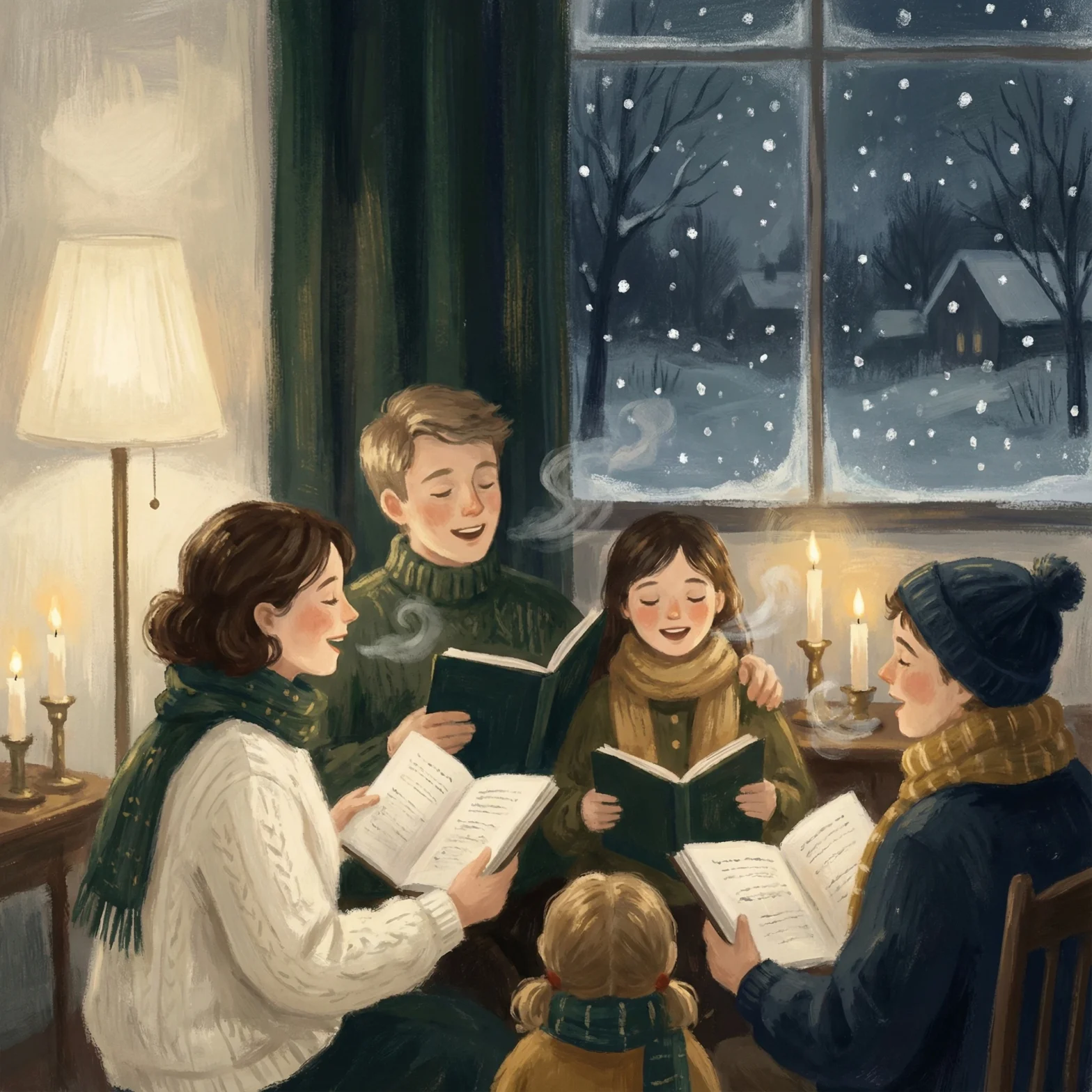
The Quiet Song
The Quiet Song. About Christmas Carols
Four formats. One voice. Clear. Confident. Rhythmic. Conversational.
1) Poetic
They arrive quietly.
A breath of cold air… then a melody.
A door opens.
Someone hums.
Another joins.
Carols don’t rush.
They circle the room like candle smoke…
slow, steady, sure of themselves.
Old words. Familiar turns.
Yet every year they land differently.
This is their trick.
They don’t shout joy.
They practice it.
Each refrain is a small remembering:
of warmth,
of gathering,
of voices choosing harmony over silence.
Sing long enough and something shifts.
The room softens.
So do we.
2) Instructional
Here’s how Christmas carols actually work, without the fuss.
First: repetition.
Simple melodies. Predictable structures. Easy to join, even if you’re unsure.
Second: shared memory.
You don’t learn most carols.
You recognize them.
Third: pacing.
Verses move gently. Choruses return like anchors.
The music leaves space for breath, for others, for feeling.
Want to use carols well this season?
- Start slow. One song is enough.
- Sing together. Perfection breaks the spell.
- Let silence sit between verses… it matters.
Carols aren’t background noise.
They’re participation cues.
3) Narrative
It starts the same way every year.
Someone says, “Shall we?”
Someone else laughs. Someone hesitates.
Then…music.
At first, voices wander.
Keys are missed. Timing drifts.
No one cares.
By the second verse, something clicks.
People lean in.
Breathing syncs.
The room finds its rhythm.
You notice it mid-song:
that strange calm,
that gentle lift in the chest.
This is why carols survive centuries.
Not because they’re perfect…
but because they make strangers sound like a choir.
4) Story
Once, there was a village that sang only once a year.
Not because they were busy.
But because they were afraid of getting it wrong.
One winter night, the power went out.
No lights. No clocks. No screens.
Someone sang anyway.
Off-key. Brave. Uninvited.
Another voice followed.
Then another.
The village didn’t sound impressive.
But it sounded alive.
From that night on, they sang more often.
Not louder.
Not better.
Just together.
And that—more than any ornament or feast—
is what made it feel like Christmas.
Takeaway
Christmas carols aren’t about nostalgia.
They’re about alignment:
voices, breath, moment, meaning.
Sing them as they are.
Let them do what they’ve always done.
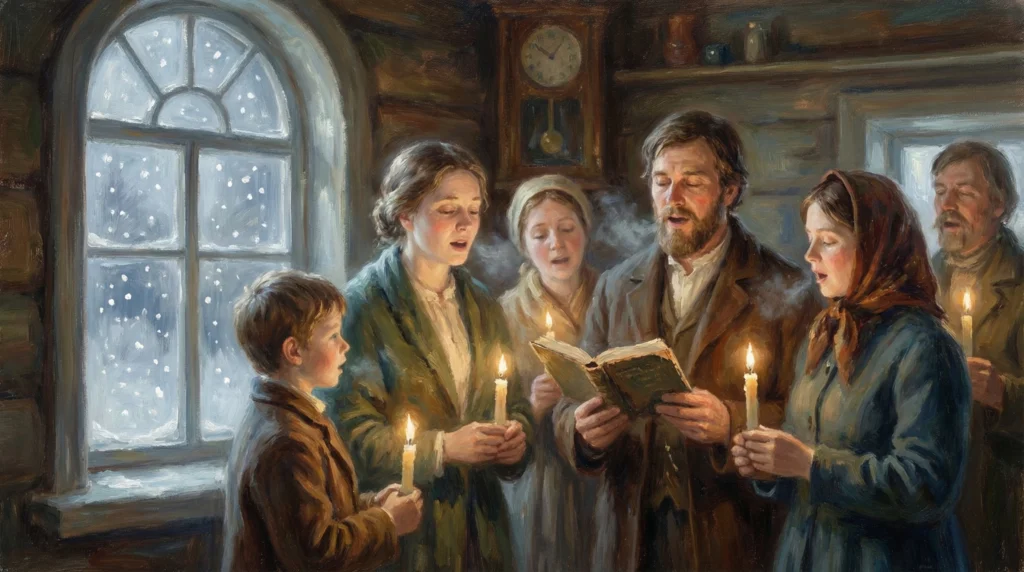
A warm, poetic winter illustration of people singing Christmas carols together by candlelight.
The scene is intimate and timeless: soft golden light, gentle shadows, visible breath in the cold air, subtle snowfall outside a window.
Faces are calm, present, and slightly imperfect—real voices, real warmth.
No stage, no performance. Just shared singing.
The atmosphere feels slow, reverent, and human.
Style: painterly, slightly impressionistic, storybook realism.
Brushstrokes visible but soft.
Muted winter tones with warm highlights (ivory, deep green, midnight blue, candle gold).
Mood: quiet joy, togetherness, memory, breath, harmony.
No text. No symbols. No clichés.
Let silence and light do the work.
Christmas Carols
Time of grace and joy and peace
Gregorian Christmas chants

