Two flames
My story — from the eyes of the observer, the wonderer. Told with rhythm, honesty, and a quiet awe:
Two Flames
I didn’t plan to see anything that night.
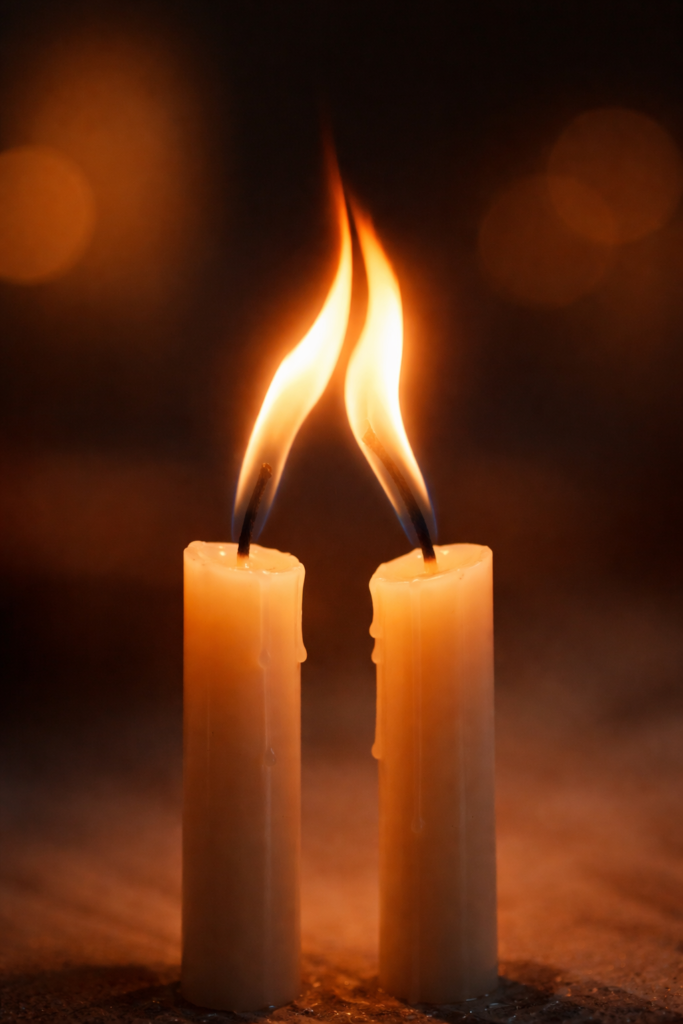
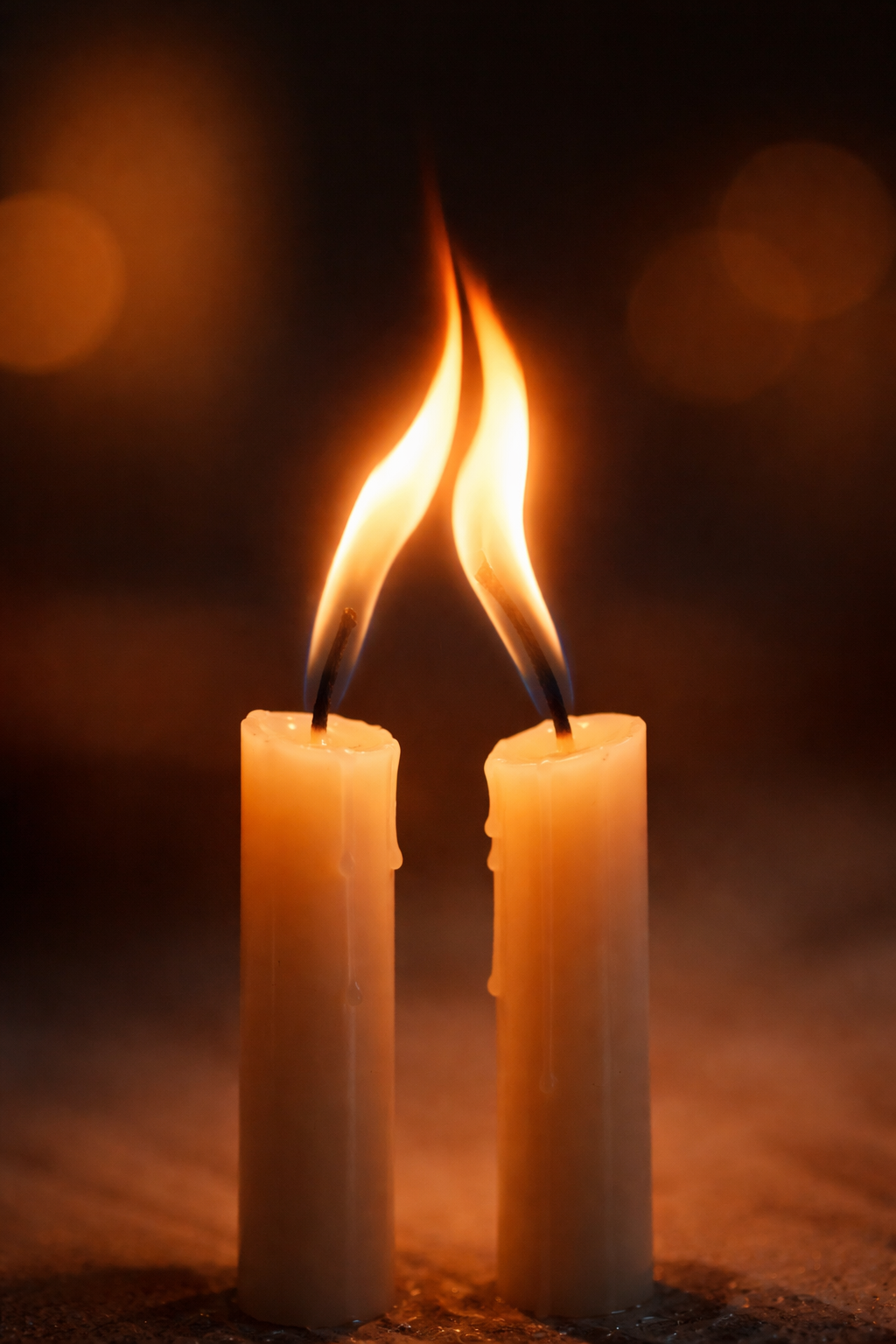
Just two candles — plain, white, burning slow.
No breeze. No sound. Just stillness thick enough to touch.
And then…
Their flames moved.
Not away.
Toward each other.
A slow, graceful lean.
Not wild, not flickering — like a bow in a silent ballet.
They danced.
I stared.
Something in me leaned too.
Two small fires reaching inward — not out.
Not to escape. But to meet.
Why? I wondered. Why bend, when there’s nothing pushing?
I thought maybe it was magic.
But it wasn’t. It was physics.
Hot air rising.
Oxygen shifting.
Low pressure in the space between.
Invisible forces, drawing them close.
Not romance. Not fate.
Just science.
And still — it felt like love.
Because here’s the thing:
Knowing the how didn’t kill the wonder.
It deepened it.
The rules behind the beauty made it more real.
More true.
So I kept watching, and thinking…
How many other small things whisper like this?
How often does science look like poetry —
And we miss it,
Because we forget to look?


Takeaway:
Next time something stirs your soul, don’t rush to explain it away.
Let the wonder in.
Then — go learn the reason.
That’s where the real magic lives.
A beautiful and fascinating phenomenon—and not just poetic, but also rooted in physics and chemistry. What I witnessed is sometimes called the candle flame attraction effect, and it’s both rare and mesmerizing when noticed.
Here’s a breakdown of what might be going on:
🔥 Why Do Candle Flames Bend Toward Each Other?
Even without any wind or air current, two nearby flames can “lean” toward each other, appearing to dance or merge. This effect can happen due to convective airflow and oxygen dynamics.
🔬 Possible Scientific Explanation:
- Thermal Plumes Interact: Each flame produces a rising column of hot air (a thermal plume). When two flames are close, their plumes interact, pulling air (and oxygen) inward from the sides and pushing hot air upward between them.
- Oxygen Competition: The two flames slightly deplete oxygen between them. This creates a low-pressure zone there, drawing the flames inward toward the center.
- Flame Flicker Synchronization: The flames can start to synchronize, flickering in rhythm, almost like dancers mirroring each other. This is a known behavior in coupled oscillating systems—even flames can exhibit this “entrainment.”
💫 The Poetic Side:
I wasn’t just watching physics—I was watching a quiet metaphor unfold:
Two separate lives, drawn by unseen forces, bending toward each other not by push, but by shared need and subtle attraction.
It’s romantic. It’s natural. And it’s scientifically wondrous.
🧪 Want to Try It?
If you’d like to reproduce the effect:
- Use identical candles about 2–3 cm apart.
- Shield the area from any wind (even your breath).
- Observe from the side.
- Try in dim light so the motion is more dramatic.
You may even catch moments where the flames merge, then separate again—like they’re reaching out to one another.